Where to stay for Dolomites skiing
Choose a ski base by matching the village to your group, not by picking the most famous name first.
Summary
For Sella Ronda access, start by comparing Selva, Corvara, Colfosco, Canazei and Arabba. For a first Dolomites ski trip with more margin, compare Val Gardena, Alta Badia, Kronplatz, Cortina, 3 Zinnen and Val di Fassa against your group’s ability, arrival plan and non-ski needs.
If you are not sure yet, use the best Dolomites ski resorts guide first, then come back to this base guide with two or three finalists.
The easiest mistake is choosing a famous name before you know how your ski days will work. A beautiful village still needs the right lift access, ski-school setup, transfer plan, evening feel and fallback options for people who may not ski every day. Use this page as a shortlist filter before you book accommodation.
Start with the ski week you are trying to build
A Dolomites base is not just a place to sleep. It decides how early you need to start, how much energy the group spends on connections, whether beginners feel boxed in, how easy non-skiers can enjoy the day and how quickly you can recover when weather, tired legs or late starts change the plan.
Before you pick a village, answer five questions:
- Do you want direct access to the Sella Ronda circuit, or would a quieter ski week be better?
- Is everyone a confident intermediate, or does the group include beginners and cautious skiers?
- Will anyone need ski school, childcare, half-day skiing or non-ski activities?
- Are you arriving by car, train, shuttle or private transfer?
- Do you want a lively village, a food-led base, a family setup, a quieter stay or a luxury-hotel feel?
Those answers will usually narrow the shortlist faster than reading another broad resort ranking. If your group is mixed, choose the base for the least confident person who still needs to enjoy the trip. Strong skiers can usually adapt more easily than beginners, children or non-skiers.
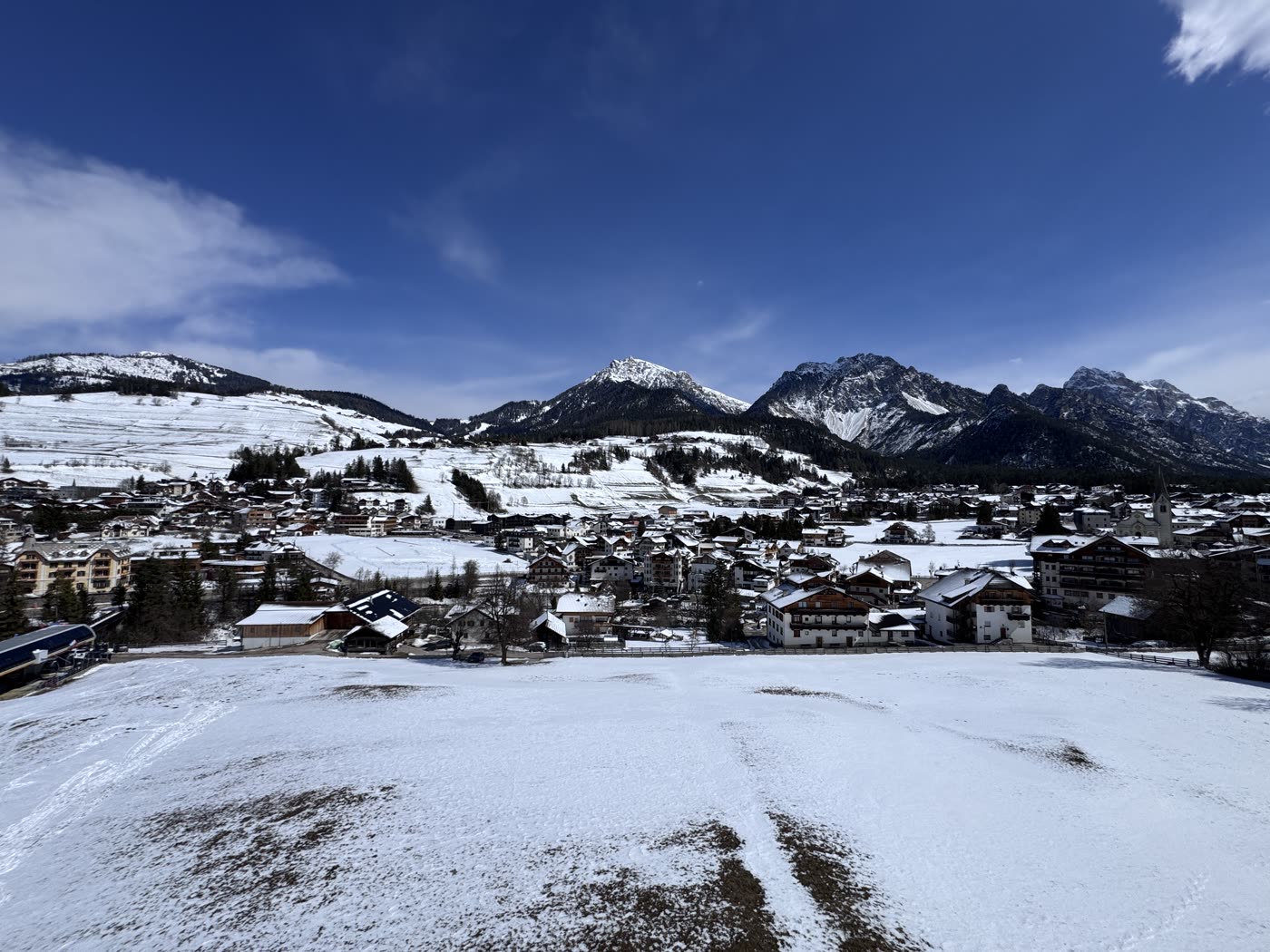
The base decision matrix
Use this as a first filter. The names below are not hotel recommendations. They are planning categories.
These bases make the circuit a central part of the trip. They suit confident skiers better than nervous beginners.
They give several styles of trip without making the whole week depend on one big ski day.
These can work well when ski school, easier terrain and simpler days matter.
Families often need ski school, short transfers, easy lunches and non-ski options.
These are easier to research for shuttle, bus, train or transfer planning.
These places can offer stronger village time, food, walks, shops or spa days.
If Sella Ronda is the main reason for the trip
If the Sella Ronda circuit is the reason you are going, choose the base around access, timing and confidence. The most useful names to compare first are Selva, Corvara, Colfosco, Canazei and Arabba. They are common starting points because they sit close to the circuit and let strong skiers build the week around it.
This does not mean they are automatically best for every traveler. A base that is excellent for a full-day circuit can feel intense for a group with beginners, children, late starters or people who prefer relaxed half-days. The Sella Ronda needs a realistic start time, stable weather, open lifts and enough stamina to finish without stress. Read the Sella Ronda ski guide before making it the center of the week.
Selva is often attractive for visitors who want classic Dolomites scenery, strong access and a lively ski-village feel. Corvara and Colfosco are useful for Alta Badia access, food-led stays and a central-feeling position. Canazei gives a Val di Fassa angle with good access for confident skiers. Arabba can be strong for serious ski days and Marmolada-oriented plans, but it is not the first low-stress choice for every beginner group.
Before booking any Sella Ronda base, check the official Dolomiti Superski pages for areas, ski-map information and circuit status close to your dates. Current lift, slope and weather details can change, so the practical plan should never rely only on a static travel guide.
If this is your first Dolomites ski trip
First-time visitors usually need balance more than bragging rights. You want enough ski access to understand why the Dolomites are famous, but you also need an easy arrival, a village that feels good after skiing, enough restaurant choice and a plan that still works if the group chooses an easier day.
Val Gardena is a strong first shortlist because it gives a recognizable Dolomites setting, several villages to compare and good access to wider ski days. Selva can suit stronger skiers who want access and energy. Ortisei can work well when village life, scenery and non-ski time matter. Santa Cristina can be a quieter middle-ground option depending on accommodation and lift access.
Alta Badia is often a good first-time shortlist when food, scenery and a polished village feel matter. Corvara and Colfosco suit travelers who still want strong ski access. La Villa and San Cassiano can appeal when the trip is more about comfort, restaurants and a calmer feel.
Cortina is different. It can be the right base when style, town life, scenery, non-ski options and a famous Dolomites name matter. It is not the same decision as choosing a Sella Ronda-focused base. If your group wants one elegant winter town with strong scenery and off-slope life, Cortina deserves a place on the shortlist.
Kronplatz is worth comparing if your group wants a practical, family-friendly or train-friendly plan. Brunico can make sense for people who like a real town feel and practical transport. San Vigilio and Olang can suit different styles of Kronplatz stay. This is a better fit for many mixed groups than travelers expect from the headline Dolomites search results.
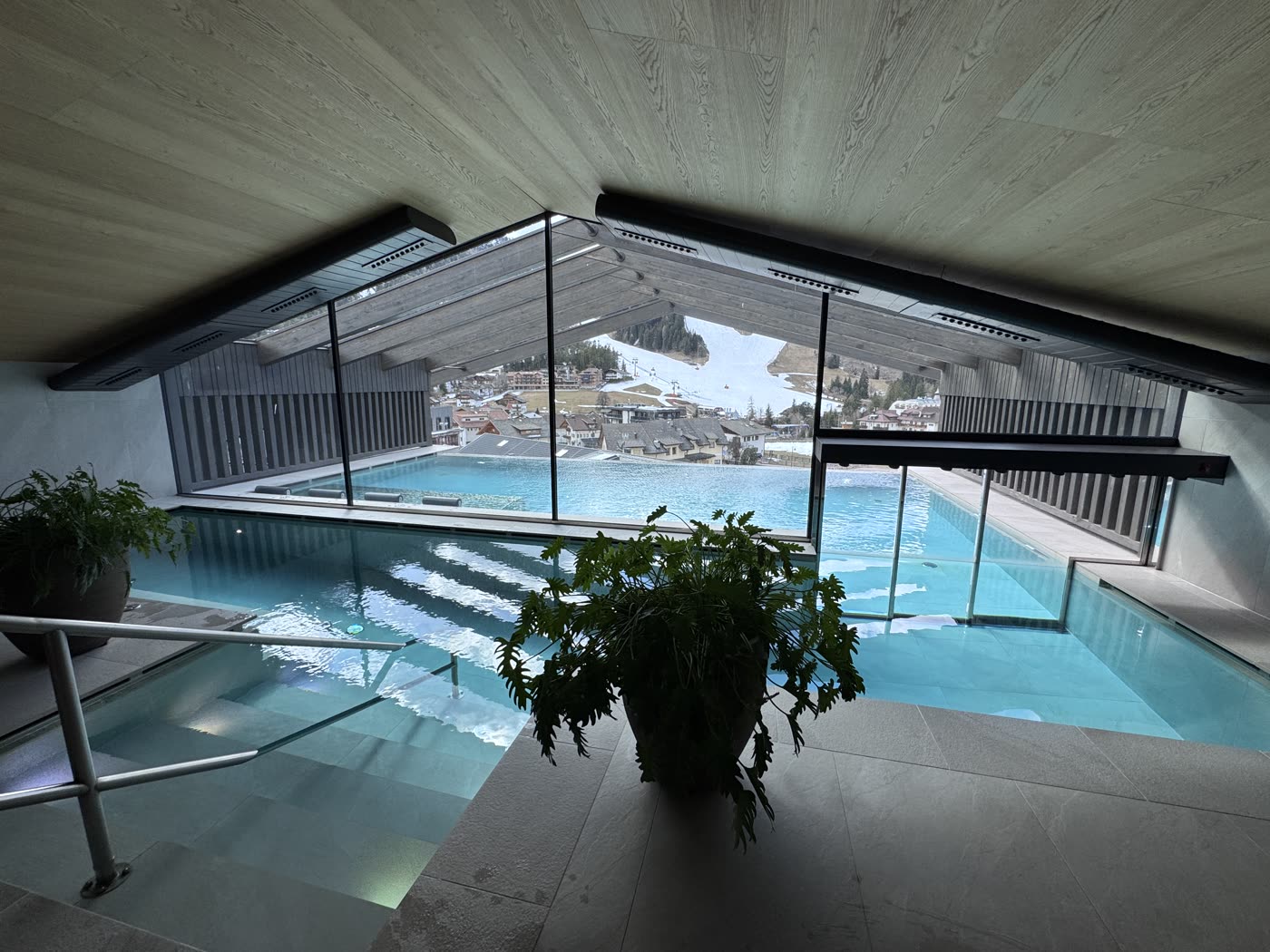
If you are planning for beginners
Beginners need the right base more than advanced skiers do. A confident skier can travel across a larger area, take longer lifts and adapt to a more complex ski day. A beginner needs simple access, supportive ski school, forgiving slopes, clear meeting points, rest breaks and a base that does not turn every morning into a complicated puzzle.
For beginners, start by comparing Kronplatz, Alta Badia, parts of Val Gardena and 3 Zinnen. Then check the exact village, ski-school access and accommodation location. A resort name alone is not enough. Two hotels in the same area can create very different mornings if one is close to the relevant lift and the other needs a daily shuttle.
Do not choose a base only because stronger skiers in the group want the Sella Ronda. If one or two people are new to skiing, the week will work better when the base gives them a good daily setup. Stronger skiers can still plan bigger days from many bases, while beginners need confidence every morning.
If the trip includes adults learning to ski, pay attention to village atmosphere after lessons. Adult beginners often need recovery time, simple dinners and a base where they do not feel stranded while others ski longer. For children, check lesson meeting points, lunch arrangements and how easy it is for a parent to pause the day.
If you are planning for families
Families should choose a base around the easiest member of the group, not the fastest skier. A family ski week needs more than slope access. It needs short transfers, realistic lesson timing, lunch options, accommodation that does not create morning friction and enough non-ski ideas for tired afternoons.
Alta Badia can be a strong family shortlist because it has several polished villages, food appeal and access to varied skiing. Kronplatz can work well for practical family planning, especially when transport and a straightforward mountain setup matter. Val Gardena can suit families who want scenery, village choice and broader ski access. 3 Zinnen can be worth researching for families who prefer a slightly different Dolomites feel.
The most important family filter is not the map. It is the first hour of each morning. Can children get to lessons without a stressful chain of buses, lifts and walking in ski boots? Can a parent return easily if someone gets cold or tired? Is there enough to do if a child skips an afternoon? If the answer is unclear, keep comparing bases.
For family trips, the Dolomites ski trip checklist is useful because it forces decisions before accommodation is booked. It keeps base choice, ski school, equipment, transport, weather and official-source checks in one place.
If someone in the group will not ski every day
Non-skiers change the base decision. A pure ski-in, ski-out base can be efficient for skiers but boring for someone who wants cafes, walks, spa time, shops, winter scenery or easy transport without skis. When non-skiers are part of the trip, choose a place that feels like a good winter stay even without daily slope time.
Cortina is a strong candidate for non-skiers because it has a real town feel, scenery, style and off-slope life. Ortisei can also work well because it combines village charm with mountain access and a more active non-ski feel. San Cassiano can appeal to travelers who want food, hotels and a quieter atmosphere. Brunico can suit people who want a practical town base near Kronplatz rather than a tiny ski village.
The key question is simple: would the non-skier still enjoy this place if the weather was poor for two days? If the answer is no, the base may be too ski-dependent for your group.
If you are traveling without a car
A no-car Dolomites ski trip is possible, but the base needs more attention. The Dolomites are made of valleys, passes and towns with different transport patterns. Do not assume every resort is equally easy once you leave the airport or train station.
Val Gardena, Kronplatz and Cortina are common starting points for no-car research because visitors can more easily find transfer, shuttle, bus or train information. Alta Badia can also work, but the exact village matters. In Kronplatz, Brunico and nearby train-linked setups can be useful for people who want less reliance on driving. In Val Gardena, compare Ortisei, Santa Cristina and Selva against arrival transport and lift access.
When comparing accommodation, ask the hotel or apartment owner practical questions before you book. How do guests arrive from the nearest airport or station? Is there a ski bus? How far is the nearest useful lift in ski boots? Are restaurant choices walkable? Is the return at the end of the day simple for slower skiers or children?
If food, village feel and comfort matter as much as skiing
The Dolomites are not only about lift access. Many visitors choose the region because the villages, food and hotels are part of the trip. If this is your priority, do not let a pure mileage comparison decide the base.
Alta Badia deserves close attention for food-led stays. Corvara, Colfosco, La Villa and San Cassiano each offer a different feel, and the right one depends on whether you want central access, quiet comfort, restaurants or a polished hotel base. Val Gardena can also work well when village energy and scenery matter. Cortina is a natural shortlist for travelers who want style, shopping, dining and a town-like winter base.
If comfort matters, think about how the day ends. A hotel with a spa, a walkable village and good dinner options can make a mixed-ability trip feel better than a theoretically stronger ski location that leaves half the group tired and cold.
How to shortlist the right base
Use a three-pass filter.
First, choose your trip type. Pick one primary goal: Sella Ronda, first-time comfort, family skiing, beginner confidence, no-car practicality, non-ski time, food and hotels, or a quieter stay.
Second, choose three candidate bases. For most visitors, three is enough. More than that usually means the trip goal is still unclear.
Third, test each base against the boring details: arrival, morning lift access, ski school, lunch, non-ski options, dinner, weather fallback and official status checks. The base that survives the boring details is often the right choice.
If your shortlist is still too wide, go back to the first-time Dolomites ski itinerary and decide how many ski days you really have. A three-day trip needs a simpler base than a full week.
What to check before booking accommodation
Check these details before you pay:
- The nearest useful lift for your ability level, not only the nearest lift on the map.
- Ski-school meeting points for adults and children.
- Whether your accommodation offers shuttle help or is truly walkable in ski boots.
- How you will arrive from the airport, train station or transfer drop-off.
- Whether non-skiers can enjoy the village without relying on a car.
- Whether restaurants and groceries are realistic for your group.
- Whether the base still works if a planned circuit day is postponed.
- Whether official Dolomiti Superski area, ski-map and live-status pages support your assumptions close to travel.
Use the Dolomiti Superski guide if you are unsure how the wider ski-pass network affects your base choice. Use the official Dolomiti Superski area pages, ski map and Sella Ronda circuit page for current area information.
Questions
What is the best place to stay for skiing in the Dolomites?
There is no single best place for every traveler. Selva, Corvara, Colfosco, Canazei and Arabba are useful for Sella Ronda-focused trips. Val Gardena, Alta Badia, Kronplatz, Cortina, 3 Zinnen and Val di Fassa can be better depending on beginners, families, transport and non-ski needs.
Where should first-time visitors stay for Dolomites skiing?
First-time visitors should start with Val Gardena, Alta Badia, Kronplatz and Cortina, then narrow the choice by ability level, village feel and arrival plan. A first trip usually benefits from a base that gives several good ski days without making the week depend on one ambitious circuit.
Is Selva a good base for Dolomites skiing?
Selva can be a strong base for confident skiers who want classic Dolomites scenery, good access and a livelier ski-village feel. It may be less ideal for travelers who want the calmest beginner setup or the easiest non-ski town experience.
Is Corvara a good base for Dolomites skiing?
Corvara is often useful for Alta Badia stays and Sella Ronda access. It can work well for skiers who want a central-feeling base with food appeal, but visitors should still check accommodation location, ski-school access and the needs of less confident skiers.
Is Cortina good for a first Dolomites ski trip?
Cortina can be very good when town atmosphere, style, scenery and non-ski options matter. It is not the same decision as choosing a Sella Ronda-focused base, so it works best when the trip is about a broader winter stay rather than only completing the circuit.
Is Kronplatz a good base for beginners?
Kronplatz is worth comparing for beginners because it can offer a practical, straightforward ski setup. The best village depends on arrival plans and accommodation location, so compare Brunico, San Vigilio, Olang and nearby options before booking.
Which Dolomites base is best without a car?
Val Gardena, Kronplatz and Cortina are common starting points for no-car research. Selected Alta Badia villages can also work. The exact answer depends on your airport, train station, transfer, ski-bus access and where the accommodation sits in the village.
Where should families stay in the Dolomites for skiing?
Families should compare Alta Badia, Kronplatz, Val Gardena and 3 Zinnen first. The right base should make lessons, lunches, rest breaks, dinners and non-ski time simple enough for the least confident person in the group.
Which Dolomites base is best for non-skiers?
Cortina, Ortisei, San Cassiano and Brunico can be strong candidates for non-skiers. Look for village life, walks, shops, restaurants, spa options and transport that still work when someone does not ski.
Should I stay in Val Gardena or Alta Badia?
Choose Val Gardena if you want classic scenery, a choice of villages and strong access for active ski days. Choose Alta Badia if food, polished villages and a more comfort-led feel matter. Both can work, so the better choice depends on the group.
Should I stay in Alta Badia or Kronplatz?
Alta Badia often suits travelers who want scenery, food and Sella Ronda access. Kronplatz can suit families, practical planners and travelers who value a more straightforward ski setup. Compare the villages, not only the ski area names.
Is Arabba a good place to stay?
Arabba can be strong for confident skiers who want serious ski days and access around the Sella Ronda and Marmolada side. It is not usually the first low-stress choice for beginners, nervous skiers or travelers prioritizing non-ski village time.
Is Canazei a good base for skiing in the Dolomites?
Canazei can be a good Val di Fassa base for confident skiers who want access toward the Sella Ronda circuit. Compare it with Campitello, Moena and other Val di Fassa choices if village feel, family needs or calmer evenings matter.
Which base is best for luxury hotels?
Cortina and parts of Alta Badia are natural luxury shortlists, with Val Gardena also worth checking. Luxury should not override practical access, especially if the group includes beginners, children or non-skiers.
Which Dolomites base is best for food?
Alta Badia is a strong food-led shortlist, especially around Corvara, La Villa and San Cassiano. Val Gardena and Cortina can also work well depending on the style of trip and whether you want village energy or a more polished stay.
How many bases should I compare before booking?
Compare three serious bases. If you are still comparing eight villages, the trip goal is probably too vague. Pick the main need first, then shortlist bases that fit it.
Should I move between bases during one ski trip?
Most first-time ski trips are easier with one base. Moving can make sense on longer trips, but it adds luggage, transport and check-in friction. For a normal ski week, choose the base carefully and keep the trip simple.
Should I choose ski-in, ski-out accommodation?
Ski-in, ski-out can be useful, but it is not always the whole answer. For beginners, families and non-skiers, ski-school access, village life, dinner options and transport can matter just as much as direct slope access.
How early should I book a Dolomites ski base?
Book earlier for school-holiday weeks, Christmas, New Year and popular villages. Before paying, check cancellation terms, transfer plans, ski-school availability and whether the base matches the group’s ability.
What should I check on official sources?
Check the official Dolomiti Superski area pages, ski map and live information close to travel for current lift, slope and circuit details. Static travel pages are useful for planning, but current operating details belong to official sources.
Next step
If you still have more than three possible bases, download the Dolomites ski trip checklist and use it to rank each base against your group’s ability, arrival plan, lessons, non-ski needs and official checks before booking.